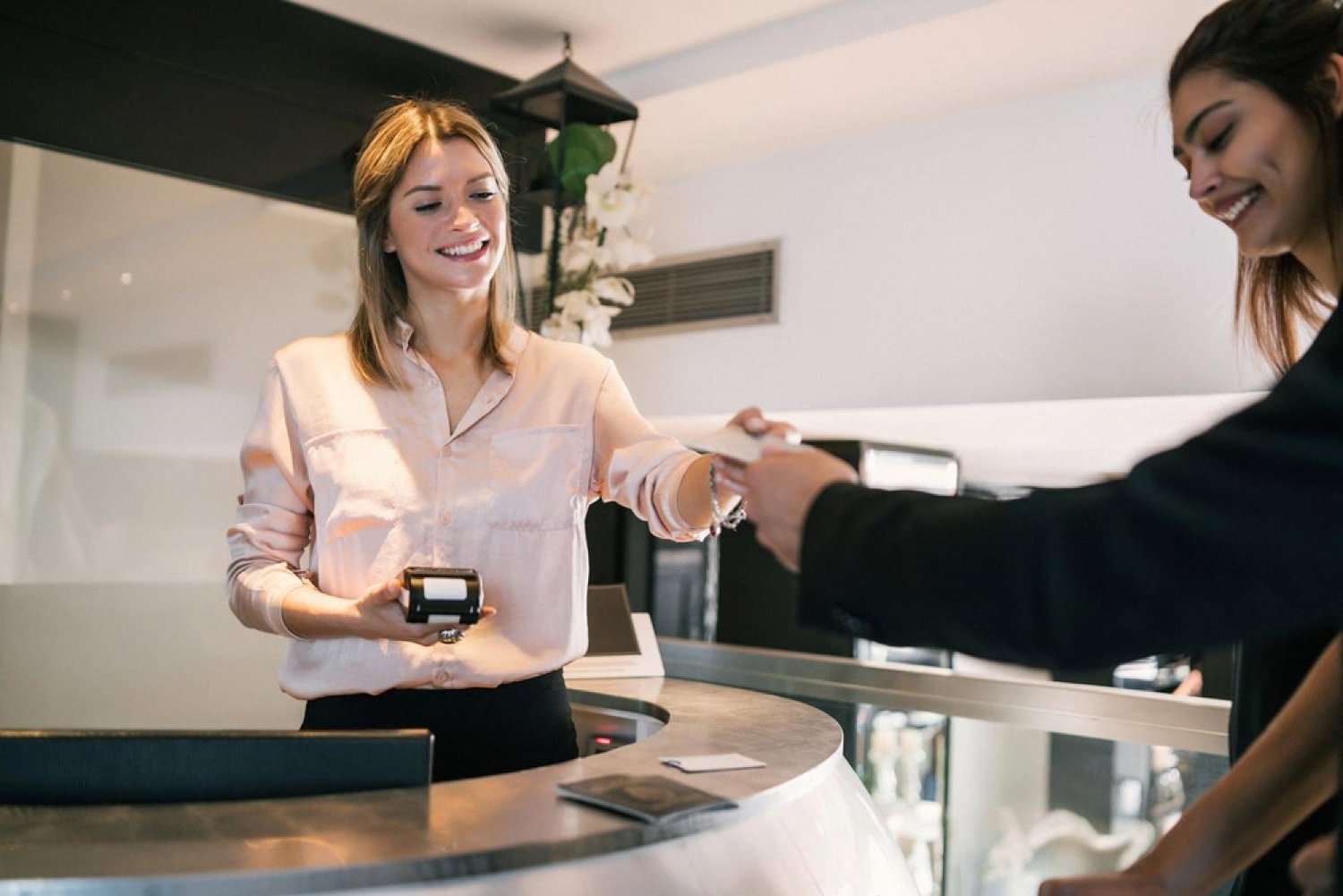
Does Opera Cloud Integrate With Self Check-in Solutions? A US Hotel Guide
US hotel technology
Opera Cloud and self check-in, does it actually work in American hotels?
Short answer: yes. Oracle’s Opera Cloud is the property management system behind a large share of branded hotels across the United States, from full-service properties on the Las Vegas Strip to select-service brands in suburban Atlanta. Through its OHIP APIs and certified partner program, it connects to kiosks, mobile apps, and lobby tablets that let guests skip the front desk line. This guide walks through how that integration works in three very different US hotel markets, what data is exchanged, and what to check before you sign a contract.
Opera Cloud is a cloud-hosted PMS built by Oracle Hospitality. It handles reservations, guest profiles, room inventory, rate management, folio and payment posting, housekeeping status, and reporting. Because it runs in the cloud and exposes a documented REST API layer (the Oracle Hospitality Integration Platform), it is far easier to plug third-party tools into it than the older on-premise Opera PMS most US hotels ran a decade ago.
Self check-in demand in the US grew sharply after 2020. Labor is tight, especially in leisure markets, and guests who already board flights with a phone barcode expect to do the same at a hotel. The result: kiosks in the lobby, QR-code arrival flows, and digital keys sent to Apple Wallet or Google Wallet are now a normal expectation, not a novelty. The question for most operators is no longer whether to add self check-in, but which partner to pick and how cleanly it talks to Opera Cloud.
New York City hotels: kiosks that clear a crowded lobby
Manhattan & the boroughs
High-volume urban check-in, powered by the PMS
Midtown properties near Times Square and JFK airport hotels in Queens see arrival spikes that can put fifty guests in the lobby inside a fifteen-minute window. A kiosk that authenticates the reservation directly against Opera Cloud, verifies ID, takes a credit card authorization, and prints or encodes a key is the difference between a five-minute wait and a thirty-minute one.
The exchange happens over Oracle’s API. When a guest taps their confirmation number or scans a QR code, the kiosk queries Opera Cloud for the booking, matches the guest profile, sends the ID scan for verification, requests a room assignment, and posts payment authorization back to the folio. Nothing lives in a spreadsheet. The moment the kiosk closes the transaction, the room’s status flips to occupied in Opera Cloud and housekeeping sees it on their next mobile refresh.

What flows between Opera Cloud and the check-in device
- Reservation lookup by confirmation number, last name, or loyalty ID.
- Guest profile data including preferences, VIP status, and stay history.
- Room inventory so the kiosk can offer an upsell to a higher category if one is clean and available.
- Payment status: pre-auth amount, deposit paid, incidentals hold.
- Check-in and check-out timestamps written back in real time.
- Housekeeping signal: dirty, clean, inspected, out of order.
Orlando and Las Vegas resorts: mobile arrivals and digital keys
Leisure destinations run a different playbook. Families arriving at an Orlando resort after a full day at a theme park do not want a lobby queue, and Vegas properties with thousands of rooms need to move guests through arrival without turning the porte-cochère into a bottleneck. Here the check-in surface is usually the guest’s own phone, not a kiosk. Marriott’s Bonvoy app, Hilton Honors, and Hyatt’s app all support mobile check-in on properties that run Opera Cloud, and independent hotels increasingly use vendors that plug into the same API layer to offer contactless check in without building the tech from scratch.
How the mobile flow talks to the PMS
- Pre-arrival prompt. The app pulls the reservation from Opera Cloud the day before and asks the guest to confirm arrival time and complete registration.
- Identity check. The guest photographs their ID and takes a selfie; a verification service compares the two and returns a pass or fail to the check-in app.
- Payment authorization. A tokenized card charge or hold is posted back to the folio in Opera Cloud through a certified payment gateway.
- Room assignment. Opera Cloud picks a room matching the booked category and any preferences on the profile, then locks it to that reservation.
- Key delivery. A digital key is issued to the guest’s phone through the lock vendor’s API, and the check-in status is stamped in the PMS.
Small independent hotels: California, Texas, and the Midwest

Boutique & select-service
Small teams, 24/7 arrivals
A 60-room boutique in Napa or a highway-adjacent hotel outside Dallas often runs with a single overnight employee, or none at all after 11 pm. Self check-in on Opera Cloud lets these properties accept late arrivals safely: the reservation is verified, ID is checked, the card is charged, and a key code is issued, all without waking anyone. The next morning the front desk sees a clean audit trail rather than a stack of registration cards.
The tradeoff is that smaller hotels rely more heavily on the integration working out of the box. A boutique operator in Austin does not have an in-house IT team to debug a broken webhook. Vendor choice matters more here than at a big brand.
Benefits US operators actually report
- Arrival wait times cut from ten-plus minutes to under two on peak days.
- Front desk staff redeployed to guest service and upsells instead of typing.
- Fewer manual errors on card holds and room assignment.
- Real-time housekeeping status, so rooms release for cleaning the moment a guest checks out.
- Clean audit trail for card-not-present transactions, which helps with chargeback disputes.
Security, compliance, and what can go wrong
The security bar is not optional. Any self check-in tool that touches Opera Cloud is also touching cardholder data, government-issued IDs, and personally identifiable information. In the US that means PCI DSS compliance for payments, and, if you operate in California, obligations under the CCPA for how you handle guest data. Card details should be tokenized end-to-end, never stored on the kiosk itself. ID scans should be encrypted at rest and purged after verification, and the vendor should be able to show you their SOC 2 report.
Where integrations tend to break
- Certification gap. Not every check-in vendor is certified against the current Opera Cloud API version. Ask for a written confirmation.
- Payment gateway mismatch. If the hotel uses OPI (Oracle Payment Interface) with a specific processor, the kiosk must speak the same protocol.
- Internet reliability. Cloud PMS + cloud kiosk = two dependencies. A backup 4G or 5G failover in the kiosk is worth the extra $30 a month.
- Staff training. Front desk agents need to know how to override the kiosk when a card fails or a guest arrives without booking.
- Support hours. A vendor with 9-to-5 East Coast support is useless for a hotel in Honolulu at 2 am.
Before you sign
Questions to put to any self check-in vendor
If the answer to any of these is vague, keep looking. The hotels that get the smoothest rollouts are the ones that pushed hardest during procurement.
- Are you certified against the current version of the Opera Cloud API?
- Do you support mobile digital keys, and with which lock brands (Assa Abloy, Salto, Dormakaba)?
- How do you verify guest identity, and where is that data stored?
- Which US payment gateways do you support out of the box?
- Can one dashboard manage several properties for a small group operator?
- Is real-time sync guaranteed, or is there a batch lag on housekeeping and folio updates?
- What is the support SLA in local time zones, and what does an outage playbook look like?
Frequently asked questions
Is Opera Cloud officially compatible with third-party self check-in kiosks?
Yes. Oracle exposes a documented REST API layer called the Oracle Hospitality Integration Platform (OHIP), and it runs a partner certification program. Kiosk and mobile check-in vendors that appear in Oracle’s marketplace have been validated against specific API versions. Always ask a vendor for written confirmation of certification against the current release rather than relying on a marketing claim.
Can guests use their own phones instead of a lobby kiosk?
Absolutely, and this is the dominant pattern for major US chains. Marriott, Hilton, and Hyatt all offer mobile check-in and digital keys through their loyalty apps on properties running Opera Cloud. Independent hotels can offer the same experience by contracting with a self check-in provider that handles the guest-facing app and the PMS integration.
What happens if the kiosk cannot verify a guest’s ID?
A properly configured system flags the reservation and routes the guest to the front desk. The check-in is not completed in Opera Cloud until a staff member overrides the exception. This is why hotels should not remove the front desk entirely; even at properties that lean heavily on self service, you need a human path for edge cases.
Does self check-in through Opera Cloud meet PCI DSS requirements?
It can, but only if the kiosk or app uses a certified payment gateway with tokenization, so raw card numbers never touch the device or the PMS. Ask the vendor for their PCI Attestation of Compliance and confirm which payment processors they support in the US. If the vendor cannot produce those documents, walk away.
Will self check-in replace front desk staff?
No, and most US operators do not want it to. The realistic outcome is that agents spend less time typing and more time on guest service: handling upgrades, answering local questions, and dealing with exceptions. In a labor-tight market, it also means one overnight employee can cover a property that used to need two.
How long does an Opera Cloud self check-in integration take to deploy?
For a certified vendor at a single property, expect four to eight weeks from contract to go-live, including staff training and a soft launch. Multi-property rollouts across a US portfolio can run three to six months because each hotel has its own room-type mapping, payment configuration, and lock hardware to align.
Can self check-in support multiple properties under one management company?
Yes. Most modern vendors offer a group dashboard that lets a management company view arrivals, kiosk uptime, and exception rates across every property in one screen. This is a common requirement for US regional operators managing ten or more hotels, and it should be a hard prerequisite in your RFP.

With over a decade of writing obituaries for the local paper, Jane has a uniquely wry voice that shines through in her newest collection of essays, which explore the importance we place on legacy.